Social Enterprise with a Heart: Insights from Our Visit to Homeboy Industries
 Katie Jo Huckins
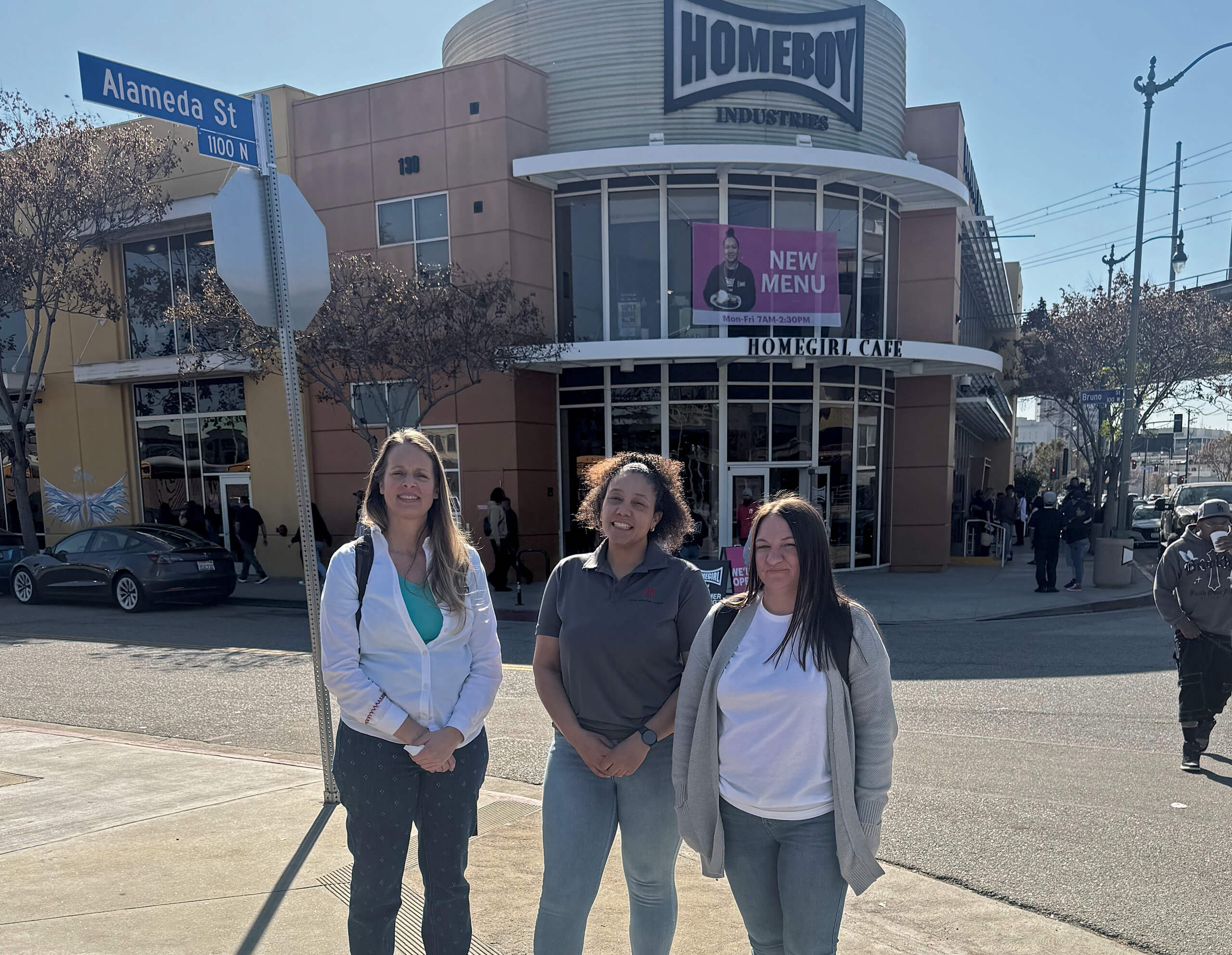
Earlier this year, four members of the Heart Ministry Center team visited Homeboy Industries (Homeboy), a longtime leader in social enterprise and support for individuals rebuilding their lives after incarceration and gang involvement. The group — Rick Berger, chief development officer; Amy Holmes, chief operations officer; Rayna Pollock, director of A Way Forward programs, and Dani Rogers, director of innovation — spent their days immersed in Homeboy’s programs, touring facilities and speaking with staff and trainees about the practical and philosophical aspects of the organization.
Founded by Jesuit priest Fr. Greg Boyle in 1988, Homeboy Industries has become the world’s largest gang rehabilitation and reentry program. It’s known for its culture of ‘radical kinship,’ a phrase that captures the idea that healing happens through genuine human connection. The Los Angeles based organization operates 14 social enterprises, each supporting stable long-term employment and offering a sense of belonging and hope for each participant.
For the Heart Ministry Center team, visiting Homeboy was inspiring and affirming. Both organizations serve people who have faced personal barriers and want to work toward meaningful change. Both believe in the power of second chances and in the dignity that comes with meaningful employment. As Dani reflected, “training is not just about learning a job skill; it’s about rebuilding trust, consistency, and confidence.”
That sense of purpose carried throughout the visit, from conversations with Homeboy trainees guiding the Heart Ministry Center team through the facilities, to the moments of shared laughter and tears that brought everyone together. “You could feel the courage it took for the trainees to be seen and see the confidence it gave them knowing the trust the organization placed in their voices,” Dani said.
Rick Berger was equally moved by Homeboy’s scale and reach. “At any given time, Homeboy may have 500 people going through their program,” he noted. “They are surrounded by resources, social workers, educators, case managers, all working toward the same outcome. The parallels with the Heart are clear; what’s different is the size of Homeboy’s operation. It’s inspiring to see what’s possible.”
Heart Ministry Center’s team witnessed firsthand what unfolds when second chances are sustained by radical kinship at Homeboy Industries. Their 14 social enterprises impress with scale while their deeper impact lies in helping people reclaim their inherent value. Back in Omaha, as the Heart Ministry Center sets out to open new social enterprises, this conviction endures. The aim remains clear, to operate successful ventures, while providing steady work for fresh start graduates to build skills, regain their sense of purpose, and enjoy long-term stability.